
Clearing Land After Logging in Lumberton, NC
Bought or inherited a tract that was just logged? Cutover is full of tops, slash, and stumps, and within a season or two it's a thicket of sweetgum sprouts and seedling pine. What to do next depends on what you want the land to be: a homesite, pasture, hunting land, or a new stand of timber. Here's how cutover gets cleaned up around Lumberton, the forestry rules that apply, and the help available for replanting.
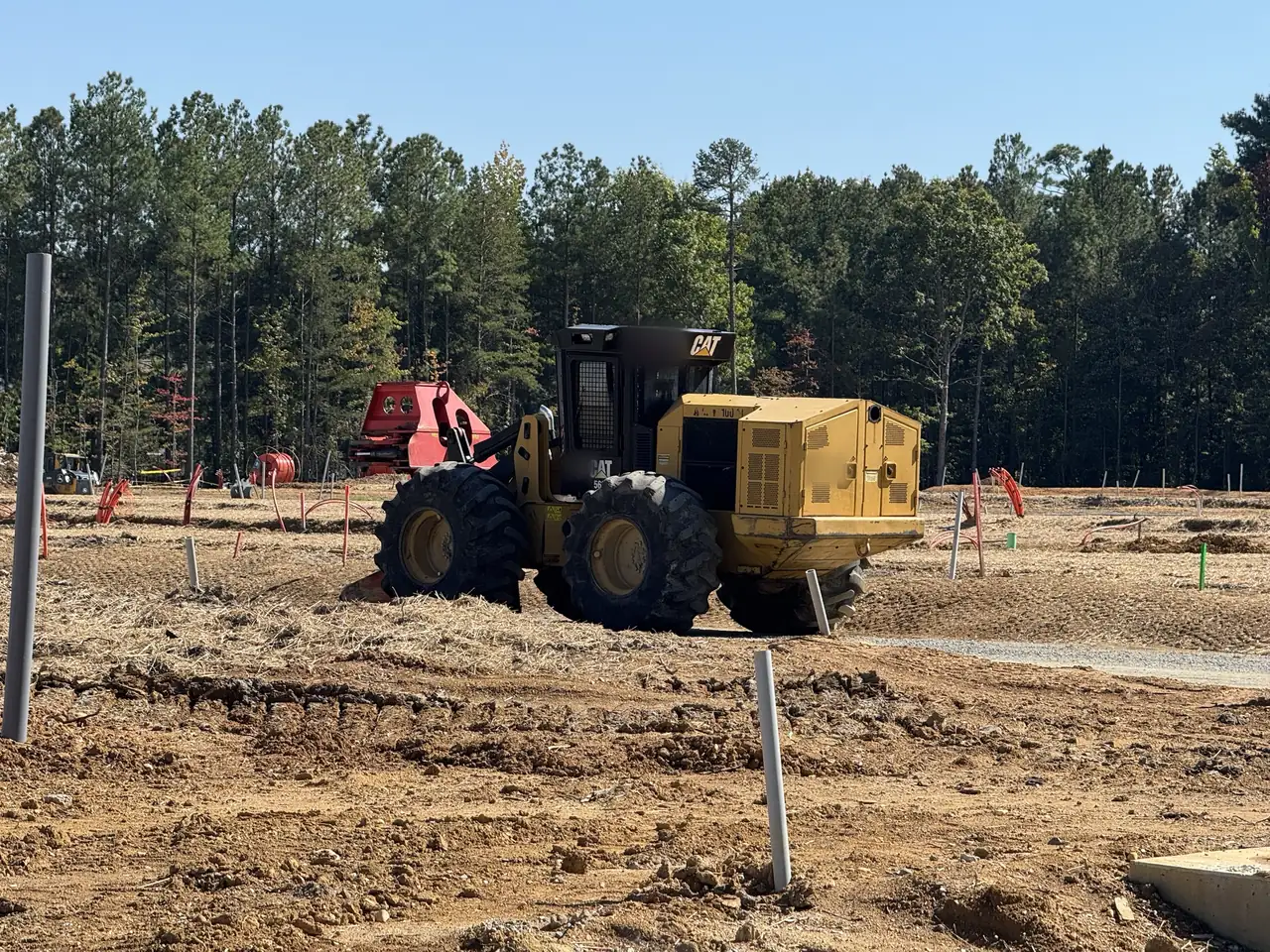
Decide what the land is for
| If you want... | The cleanup usually looks like... |
|---|---|
| A homesite | Mulch the slash and regrowth, then grub stumps only where the house, drive, and septic go. House site guide. |
| Pasture or crop ground | Root raking or pushing stumps and debris into windrows, then disking, liming, and planting. |
| Hunting land | Mulch lanes, food plots, and trails; leave the rest to grow. |
| Timber again | Site prep for planting (often chopping or shearing, sometimes bedding on wet ground), then replanting, possibly with cost-share. |
Mulching or windrows?
A mulcher grinds tops, slash, and small regrowth into a mat and cuts stumps low. It's the cleanest finish for hunting land and homesites, and it leaves nothing to burn. A dozer or root rake pushes debris into windrows and can pull stumps and roots, which crop ground needs. Windrows then rot, get burned under the state's rules, or get hauled. Burning windrows means an NC Forest Service permit for most rural burns and 500 feet from neighbors' occupied buildings. More on burning.
Timing
Cutover gets harder to clear every season you wait. Within weeks of cutting, red maple is sprouting again, and sweetgum regenerates from root sprouts, according to the U.S. Forest Service's species guides. Clear it while the regrowth is small. If you're replanting timber, the site prep has its own timing; ask a forester.
Forestry rules that apply
- Forest Practice Guidelines. Timber harvesting is exempt from the state erosion plan only when it follows North Carolina's Forest Practice Guidelines. They require a streamside management zone along intermittent and perennial streams, keep logging decks out of it, and require disturbed areas to be stabilized within 30 working days after a phase of the operation ends. Skip the guidelines, and the harvest and related land disturbance on the tract fall under the erosion law.
- Inspections. The NC Forest Service inspects harvests for water quality but says it "does not issue monetary fines or civil penalties." North Carolina has no statewide pre-harvest notice; the Forest Service encourages landowners and loggers to contact it.
- County zoning. Robeson County zoning doesn't control timberlands. Its use table permits timber management in the A-D district and allows temporary sawmills in R-A only by special use permit, for no more than a year.
- Lumberton. Inside the city's jurisdiction, forestry needs no permit, but developing a site within two years of clearing it is treated as evidence of clearing to develop without one.
Help with replanting
- Forest Development Program. The NC Forest Service's cost-share program helps pay for reforestation and site prep: at least 5 acres, up to 100 acres a year, with a forest management plan, and approval before the work begins. Its brochure puts the rate at usually 30 to 40 percent of actual cost or the prevailing rate, whichever is less, and the stand has to be kept at least 10 years. The FY 2025–2026 cap was $10,000 per landowner. Apply through the Robeson County ranger, 1027-A Highway 74 East, Lumberton (910-618-5540).
- Longleaf pine. The Soil and Water Conservation District points landowners to EQIP's Longleaf Pine Initiative for site prep, planting, firebreaks, prescribed burning, and invasive plant control (910-739-5478 ext. 3).
- Consulting foresters. The Forest Service keeps a list of consulting foresters serving Robeson County.
If the timber hasn't been sold yet
The NC Forest Service's advice is plain: "Never sell timber without a written timber sale agreement," and get at least three bids on a clearly defined boundary. A consulting forester can run the sale. Talk about the cleanup before the harvest: what the logger leaves behind, and in what condition, sets your clearing bill afterward.
Cutover questions
Should I clean up the tops and slash or leave them?
For timber or wildlife, slash can often be left to rot. For a homesite, pasture, or anywhere you'll mow, it has to be mulched, windrowed, or hauled.
Can the logger clean it up?
Sometimes, for a price, and it works best when it's written into the timber sale agreement before the harvest.
How soon after logging should I clear?
As soon as you know what the land is for. Sprouts and seedlings thicken every season.
Do I need a permit to clear cutover?
Not for forestry or farming. For development, yes: a zoning permit in the county or city, plus a state erosion plan if more than an acre is disturbed.
How we help
By phone or short request, let us know where the tract is, roughly how many acres, when it was logged, and what you want the land to become. We'll send it to one independent contractor who works in your part of Robeson County, who walks the cutover and gives you a quote. Go ahead with them or don't; the referral costs you nothing.
Want a local contractor to walk your land?
Call or send a short request. There's no charge for the referral.