
Clearing in Flood Zones & Along the Lumber River in Lumberton, NC
Lumberton sits on the Lumber River, a blackwater river that's both a state Natural and Scenic River and a National Wild and Scenic River, and a lot of Robeson County's low ground floods. Hurricanes Matthew in 2016 and Florence in 2018 both brought federal disaster declarations here. If your land is in a mapped flood zone, or within 100 feet of the river inside Lumberton's jurisdiction, clearing comes with extra rules. Here's what they are and who to ask.
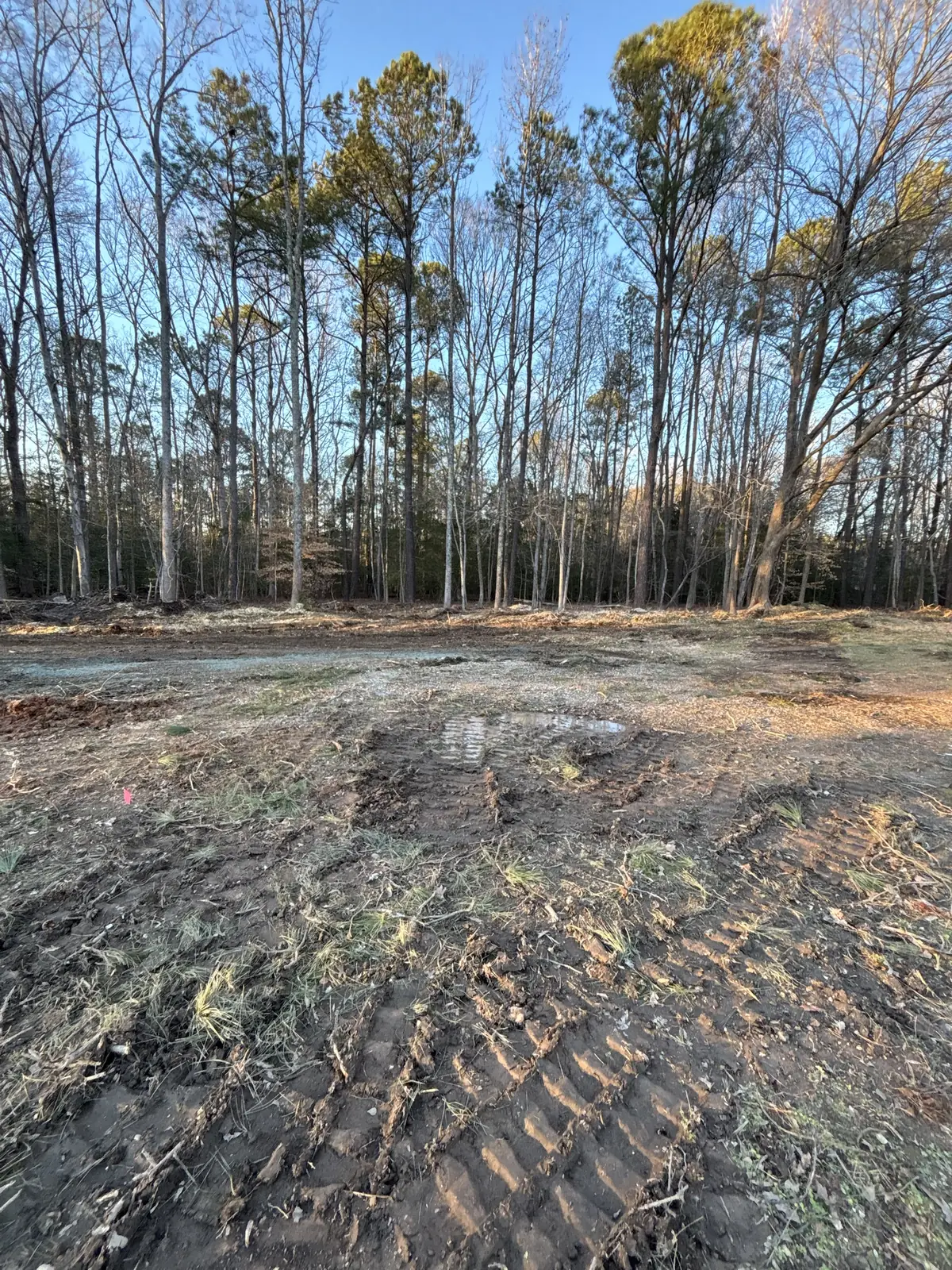
Check the flood map first
Before clearing for a house, a home, or fill, find out whether the land is in a Special Flood Hazard Area. The county's comprehensive plan points to North Carolina's Flood Risk Information System for flood maps, and a City of Lumberton notice says the city's flood map panels took effect December 6, 2019. If any part of the building area is in the flood zone, the permits below come before the machines.
Floodplain development permits
- Inside Lumberton and its ETJ. The city's flood ordinance requires a floodplain development permit before "any development activities within special flood hazard areas," and its definition of development includes filling, grading, paving, and excavation. The planning director is the floodplain administrator (910-671-3838).
- In the county. The county's flood ordinance requires a Floodplain Development Permit before development in Special Flood Hazard Areas, across the county's jurisdiction, its ETJs, and any town that opts in by resolution. Community Development handles it (910-272-6521). The copy posted online carries a 2008 heading and marked changes, so confirm the adopted version.
- Other towns. Some towns run their own; Fairmont, for one, has its own flood ordinance. Ask town hall.
- Clearing alone. Neither the city's nor the county's definition of development names cutting trees by itself. The grading, fill, and pad that usually follow clearing are named. Ask before you cut.
- Homes. The county's permit checklists call for a flood elevation preconstruction certification when the home is in the flood hazard area.
Lumberton's Lumber River buffer
The city's Lumber River Protection Overlay District, in effect since 1998, sets a buffer strip 100 feet wide, "measured landward and horizontally from the river's edge," inside the city and its ETJ. In that strip:
- "Clear cutting of trees and shrubs is prohibited within the buffer strip."
- Selective pruning or removal is allowed for a filtered view of the river and private access, as long as "the stump and root structure remain in place."
- Dead, diseased, unsafe, or fallen trees may be removed.
- No new buildings, and no excavating or removing sand, gravel, or earth.
- No new septic systems: "New on-site septic systems, including both primary and reserve areas, may not be located within the buffer strip."
In practice: hand work and selective cutting near the river, stumps left in the ground, and the house and drainfield set well back. Call Planning before any work in the strip.
Beyond the city
The Lumber River is a National Wild and Scenic River for 81 miles, and the U.S. Fish and Wildlife Service describes it as "predominately bottomland hardwood swamp." The county zoning ordinance has no river buffer section that we found, and North Carolina has no state riparian buffer rule for the Lumber River basin. Other rules still reach river and swamp land: timber harvests keep a streamside management zone under the state's forest practice guidelines, and filling wetlands needs the Army Corps of Engineers. Parts of the riverfront are Lumber River State Park, so know where your line is.
Wetlands
Bottomland and swamp are often regulated wetlands. Filling or excavating in them needs approval from the U.S. Army Corps of Engineers, Wilmington District ((704) 510-1441), plus a state water quality certification for federally permitted work. The state's water quality office advises confirming jurisdiction with the Corps first. Cutting trees isn't the same as filling, but pushing stumps and debris into a wet area can be.
Working on low ground
- Time it for a dry stretch. Tracked machines float better than wheels, but saturated bottomland stops everything.
- Don't push debris into ditches, streams, or drainage ways. Lumberton makes it unlawful to obstruct the city's stormwater system, and its development rules say natural drainage ways should be left undisturbed where practicable.
- Leave stumps and roots where you don't need them out. They hold soil when the water comes up.
- Fill in a flood zone needs a permit. Ask before bringing in a single load.
After a flood or hurricane
Storm cleanup is its own job: downed and leaning trees, root balls, and debris left by water. After Florence in 2018, NCDOT said that in Robeson County "only these three municipalities are collecting storm debris: Lumberton, Red Springs and Pembroke," and that its contractor "will not cross onto private property to collect debris." Debris on your land is yours to clear. Brush and storm cleanup covers the options.
Flood zone and river questions
Do I need a permit to clear land in a flood zone?
For grading, fill, or building, yes: a floodplain development permit from the city or county. For cutting trees alone, the ordinances don't say, so ask the floodplain administrator first.
Can I clear a view to the river in Lumberton?
Selectively, yes. The city allows pruning and selective removal in the 100-foot buffer for a filtered view and access, with stumps and roots left in place. Clear-cutting isn't allowed.
Can I put a septic system near the river?
Not within Lumberton's 100-foot buffer, primary or reserve area. Elsewhere, Environmental Health decides where it can go.
How do I find out if my land is in a flood zone?
Look up the address on the state's Flood Risk Information System, then confirm with the city or county.
How we help
Call or send a short request giving the property's location and rough acreage, and say whether any part of it is in a flood zone or near the Lumber River. We'll put it in front of one independent contractor who works in your part of Robeson County. They walk the land and quote the work, and the choice to hire them rests with you. You won't be charged for the referral.
Want a local contractor to walk your land?
Call or send a short request. There's no charge for the referral.